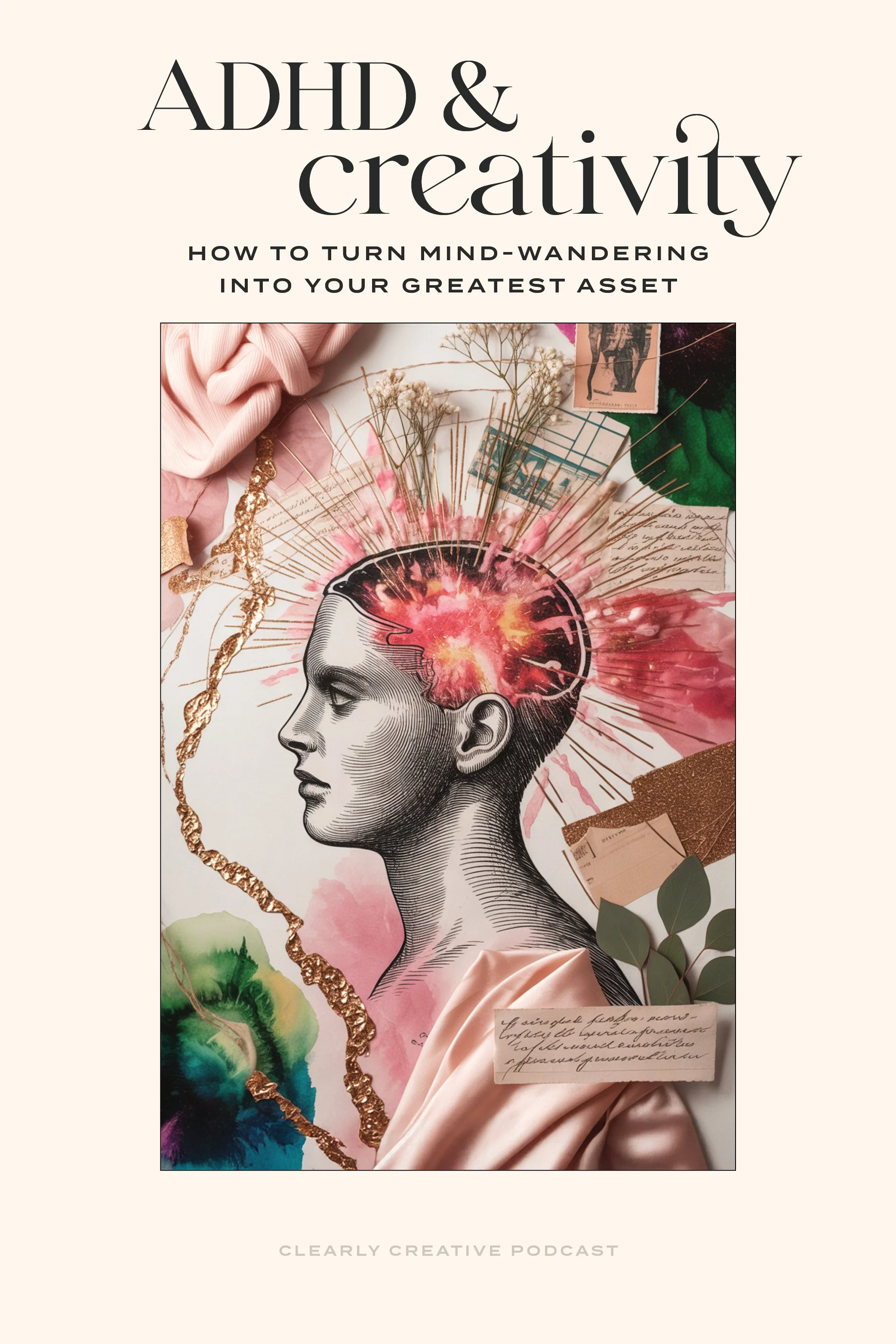
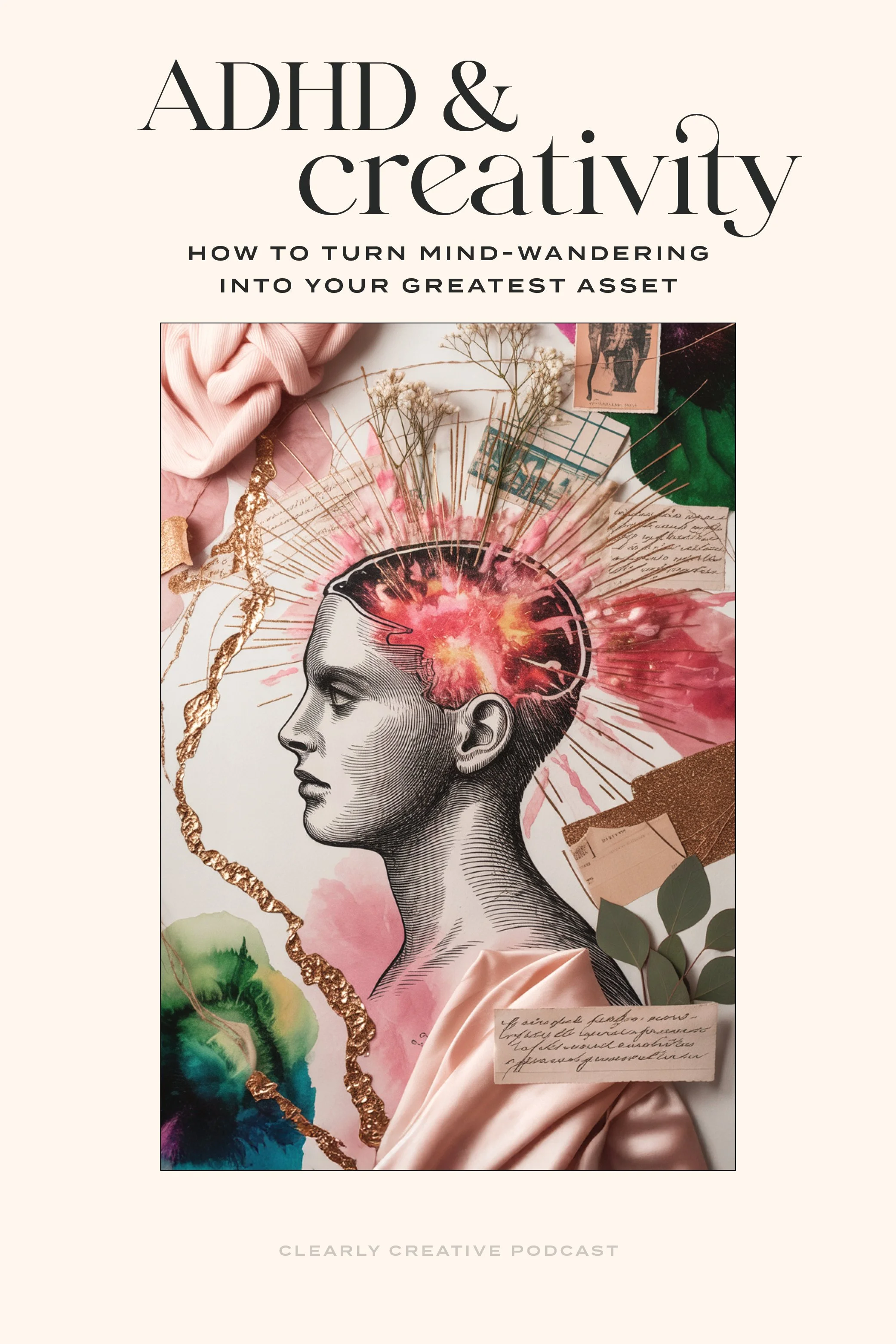
ADHD and Creativity
Have you ever felt like your brain has fifty tabs open and one of them is playing music you just can’t find?
For a long time, I saw my own "wandering mind" as a personal failure in my design process. I thought my lack of focus was a defect I needed to fix. But as it turns out, the very thing we often apologize for, our distractibility, might actually be our greatest creative superpower.
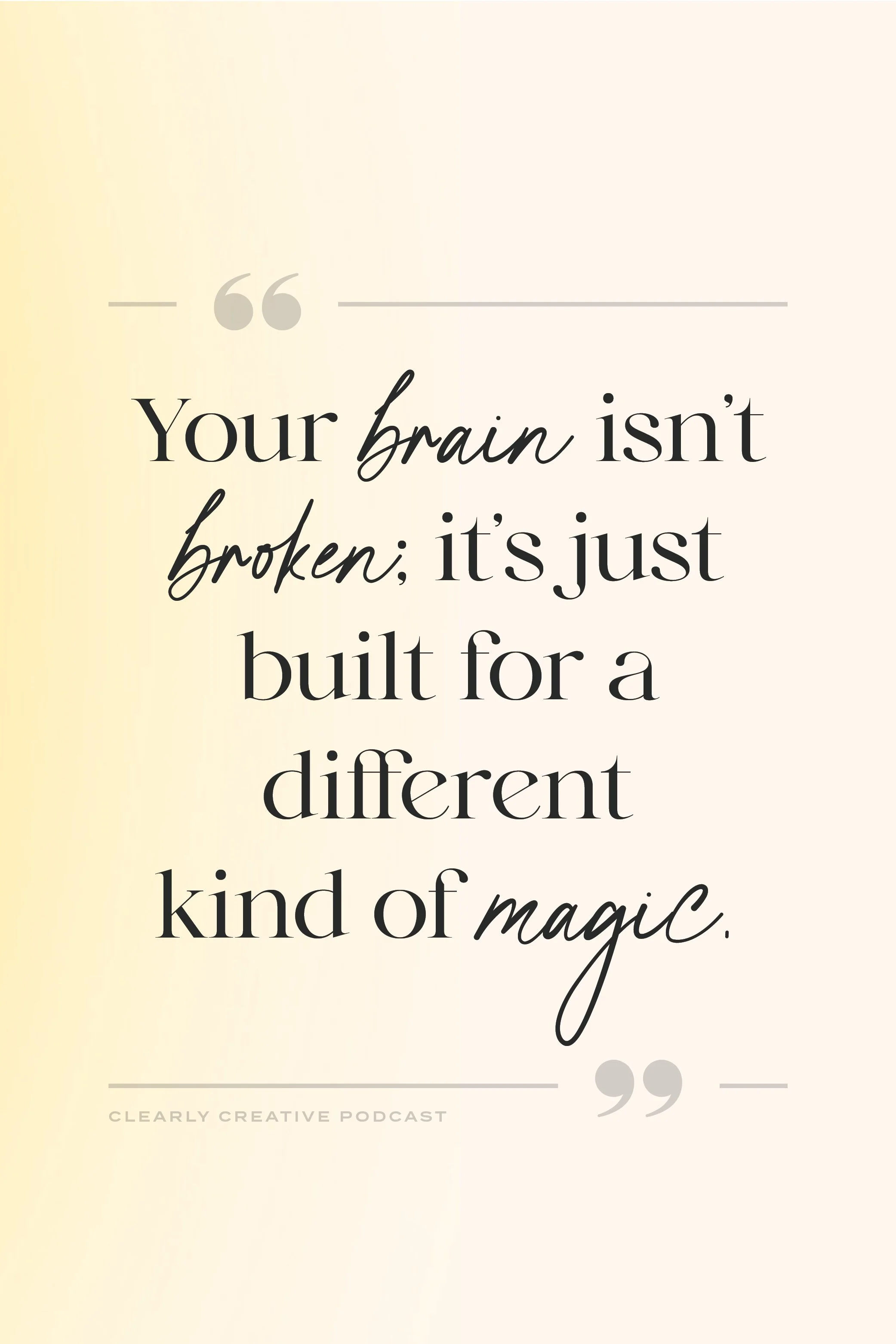
In this episode of Clearly Creative, we’re moving away from the "deficit" mindset and exploring how the ADHD brain is actually built for a different kind of magic. From the science of divergent thinking to the "brain drain" of our digital environments, we’re looking at how to stop fighting your rhythm and start working with it.
The Science of the Spark
Recent research has shown that ADHD symptoms, specifically mind wandering, are directly linked to higher levels of creative achievement. While the world often values convergent thinking, which is finding the one "right" answer, ADHD brains excel at divergent thinking. This is the ability to see multiple, non-linear solutions all at once.
The key to unlocking this isn't forced focus. It’s deliberate mind wandering. It’s about giving yourself permission to drift on purpose, allowing those non-linear connections to form.
Building Better Brakes
Dr. Ned Hallowell famously describes the ADHD brain as having a Ferrari engine with bicycle brakes. The challenge for us isn't a lack of ideas. It is the inability to stop the flood. We don't need to slow down our engines. We just need to learn how to build better brakes.
However, building those brakes can be hard when we’re facing what Jessica McCabe calls the "shame spiral." This is that heavy gap between knowing what we need to do and actually being able to do it.
The Power of Flow
When we finally break through that initial resistance, we hit a state called Hyperfocus. In psychology, this is known as Flow. It is a state of total immersion where the world falls away and action and awareness merge. For those of us with ADHD, this isn't just a quirk. It is our primary competitive advantage.
Protecting Your Sanctuary
To reach that flow state, we have to protect our "focus currency." Research from the University of Texas at Austin found that even if your smartphone is off or face down, its mere presence reduces your cognitive capacity. As lead researcher Adrian Ward explains, requiring yourself not to think about your phone uses up limited resources.
Three Mindset Shifts for This Week
Practice the Art of the Brain Dump. When your mind is pulling you in five directions, don't suppress it. Get those thoughts onto paper to "close the tabs" in your head.
Honor Your Deep Dive. If you hit a flow state, stay there. Don't force a break just because the clock says so.
The Environment Check. Move your phone to another room. Value your creative energy enough to keep it safe from "brain drain."
Show Notes & Resources
The Study: “The Mere Presence of Your Smartphone Reduces Brain Power” – UT Austin McCombs School of Business.
Expert Clip: Dr. Ned Hallowell on "Unwrapping the Gift" of ADHD.
Expert Clip: Jessica McCabe (How to ADHD) on the reality of living with ADHD.
The Theory: Mihaly Csikszentmihalyi: Flow, the Secret to Happiness.
Join the Clearly Creative Club Ready to turn your creative chaos into a structured process? Download your free episode workbook, including the Focus Framework and Inspiration Log, at clearlycreativepodcast.com.